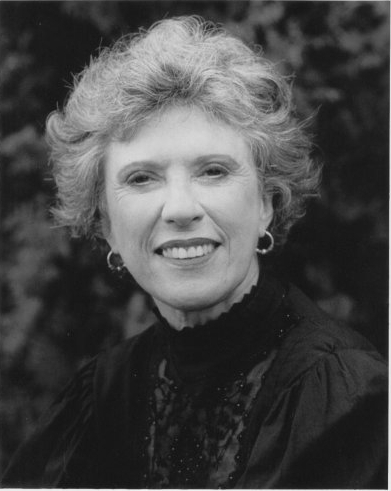
Alum Lichtig Wins Goshen Peace Play Contest 2008

Robin Rice Lichtig, Antioch Alum and accomplished play wrightRobin Rice Lichtig, Antioch College alum (59-63) placed in the top three in the Goshen Peace Play Contest 2008 this summer for her one act play, “Blood Sisters.” This prestigious award is hardly the first Lichtig has received in her play writing career.

According to Lichtig, the world of play writing is a tough one. “Any where I send a script for a competition, they get any where from 500 to 1000 scripts.” However, for Lichtig and other playwrights, contests are only the beginning. “I remember you asked me ‘what does this [award] do for you’ – and I said ‘nothing’ and it really does do nothing at all, except that when you send the play out you can mention that it was a winner,” she said. “All it ever gets you: Sometimes you get a production. Sometimes you get $300 if you’re lucky, but really that’s about it.”

Lichtig specifically spoke about the difficulty of landing a major production. “There are almost no agents for playwrights; they’re getting out of the business. It’s financial.” she said. Lichtig went on to describe a conundrum she says she and others are experiencing. Landing a major production is very difficult, especially without an agent, but the agents still in the business only work for those who have had major productions.

Lichtig also spoke of another difficulty she’s faced, one that she “didn’t want to recognize for years.” “It’s something like 12% of all the plays that are done are by women, which is a worse percentage than it was 30 years ago.” she said. “It’s a very complex situation” she said, before going on to say that “part of the reason is that the artistic directors and the boards of directors of theaters are almost all men.” Only one or two women have plays in New York this season.

However, while unhappy with the current state of the theater industry, Lichtig continues her work play writing. For Lichtig, “to be a practical playwright, you should write a play that can be done on a bare stage.” However, she doesn’t see that as a limitation. One of her plays, for example, is set in “a very elaborate tree house” she said, and “this can all be done on a bare stage and very few props.” Louise Smith, theater professor at Nonstop Institute was drawn to “Blood Sisters” not only because of the writing, but also because it could be performed with few people in a small space, allowing for maximum flexibility; she hopes to do a reading of the play in Yellow Springs this winter.

While Lichtig’s repertoire includes imaginative and magical elements, her work also finds solid ground in social, political, cultural and environmental issues. Lichtig’s winning Goshen Peace Play “Blood Sisters” is based on real events from 2003, when three nuns were convicted in Denver for defacing a nuclear weapons site. “Robin clearly takes affective poetic liberties with the story and creates characters that are charming and unexpected.” Smith said, when asked about the play.

Lichtig’s work can be found outside of theaters, too. Her publishers include Bakers Plays, Dramatic Publishing, Smith & Kraus, Brooklyn Publishers, JAC Publishing and Promotions, ArtAge, Mae West Fest, and ManhattanTheatreSource.

In 1959, Lichtig entered Antioch College in the visual arts program. Within the year, she switched to political science; in 1963 she “ended up joining the PeaceCorp and dropping out of Antioch, which was a huge mistake.” For the next twenty years she remained politically and socially active and continued her education, including a masters degree in play writing at the age of 50 from Antioch McGregor. Since then, she’s authored over 40 plays and won numerous contests.

Crossroads

Louise SmithThis is a time of major decisions with major consequences. On the global level, we have choices about how we live on the planet and with each other. On the national level, we are faced with with either choosing to make history or suck up more of the same. Locally, our village is facing changes and choices on major issues such as energy, a new village manager, how we grow and thrive economically and what happens to the historic college that was a cornerstone of our identity as a town. In the next weeks and months, I will talk with faculty, students, staff, alumni and villagers on a weekly basis about where we are and where we are going globally, nationally, locally and even personally.

It is mid September. A year ago in June, we got the word that the college would be closing in a year. For many this was a shock. For some it was a gut feeling that came to fruition. For a few it was an inevitability in a long decline. Whatever your analysis, the event had unforeseen responses and repercussions. We all know the litany of endeavors to save Antioch College: the Alumni Association, the AC3, the efforts within the Village of Yellow Springs to bring pressure on the University and show support on the local level, National academic entities such as the GLCA and the AAUP have gotten involved in a variety of ways that are ongoing. The Antioch College faculty brought a lawsuit, set it aside and revived it. They also worked to gather roughly a thousand signatures from academic luminaries and fellow professors in favor of their cause and most potent of all, created the Nonstop Institute for Liberal Arts. The Alumni mobilized in unprecedented ways, building over 40 chapters around the country and funding the Institutional Advancement office for the campus as well as the Nonstop Institute. Current, past and future students engaged with the effort on every level, from collaborating to launch Non-stop to enrolling and pledging to return after a term on Antioch Education Abroad or co-op. The list goes on. It is not for lack of trying that the college is still in limbo.

So where exactly are we? There is now a new round of discussions about separation of the college from Antioch University underway. The existence of Nonstop gives us an orientation towards getting on with the journey of revitalizing the college for real, a kind of action research that will yield valuable insights and information about how and who we can be in the future. In the coming month, a meeting will be convened at Earlham College, sponsored by the GLCA that is called “Invent a College”. It would be a crying shame if the organizers of this event do not pay very close attention to what is already being invented every day here in our village. Nonstop has great potential and its leaders and participants are already developing the understanding that will move this effort forward.

Going forward means working with Nonstop and the other efforts that we can impact on a daily basis within our scope of power and influence. The October 1st Committee is working with the village leadership, villagers, faculty and alumni to preserve the campus. This committee has recognized, as many of us have, that the University has done a shoddy job at best and an intentionally negligent job at worst, of putting the buildings to sleep until we figure all of this out. Whatever the intention, the result is the same: a major compromising of the physical and historical assets of the college. We need to look behind us, where we have come from to the historical aspects of the college that we are stewards of. Without that we will fly headlong into creating an entity that bears absolutely no resemblance to what was. And while this may be desirable to a small portion Antiochians, for many of us, our passion for the place is grounded in shared values, understandings and memories that cannot be separated from our roots on the campus. In the coming weeks and months, it will also become apparent how our village has built its identity around the college. The health of the village financially and socially is in great jeopardy.

All of us have had our own personal response to the major upheaval that we have collectively experienced. I took a bit of a left turn. Several years ago, when our numbers had fallen and grandiose plans were put in place to revive us, I realized that my personal journey was taking me elsewhere. I spent four years at University of Dayton earning a Masters of Science in Education in Community Counseling. Ironically, while being a student at another institution, I came to value Antioch all the more. I also found that I liked how therapy and teaching theater talked to each other in my brain. I worked for a year as an intern at Wilmington College counseling students there. (I hope to do this again with Nonstop.) However, I knew I needed to challenge myself and move forward on this new road. This summer I took a position as therapist on an ACT team at South Community Behavioral Health in Dayton.

ACT stands for Assertive Community Treatment and my job entails home visits to clients who have persistent and serious mental illness. The people I talk to are mostly diagnosed with schizophrenia and schizoaffective disorder and the challenges they face are numerous : managing finances, medication compliance, skills of daily living and the acute isolation that comes with a lifetime of living with a severe mental disorder. I commute every day to Moraine where the agency is located and then spend a good portion of my nine hour day driving around parts of Dayton I have never seen before. I am challenged in complex and unexpected ways to respond to people who have great need. I work with a team of people in a “transdisciplinary” way. While I am a therapist, I am also doing case management and assessing med compliance. The nurse clearly does counseling and the case manager is surprisingly knowledgeable about medication side effects. There are more acronyms in mental health than Antioch ever had (ACT, IDDT, ODADAS, ODMH, CCOE, DID, PTSD, OCD, ODD etc.) and the politics involved in the health care system are far more screwed up than academia. So I feel right at home—wait—Why in heaven’s name did I do this anyway?

Sometimes I think that despite myself I am living out some kind of Antiochian ideal. For fifteen years I was a professional actor. The next fifteen I was a teacher and for the next fifteen years I plan on developing into a therapist and reinventing my art practices to reflect all of the learning I have been doing. Nonstop is part of this next phase of my life, one in which the walls of the hospital and the college fall away, where definitions of who I am become more expansive and fluid, and where I are humbled and inspired by situations that make me muster more than I knew I had to give.

Are you at the crossroads? Write me at lou422ns@woh.rr.com. I want to hear your story.

Upcoming Nonstop Presents Events

Oct. 2: The Junkyard Ghost Revival

7pm, Apollo Room, Student Union, Wright State University

Celebrated spoken word theater, The JGR- Derrick Brown, Andrea Gibson, Anis Mojgani, and Buddy Wakefield- will guide the audience through a tour of their personal junkyards.
[Co-sponsored with with Women’s Center at Wright State]

Oct. 4: The History of Jazz

9am-12pm, Bryan Center, Room A, 100 Dayton Street.
1-4pm, Senior Citizens Center, 227 Xenia Avenue.

Steve Schwerner, Antioch College emeritus faculty, will teach a day-long workshop on the History of Jazz, starting with its origins in the African-American tradition to the present day world music it has become.

Oct. 5: Founder’s Day

The Nonstop Community will celebrate the founding of Antioch College in 1852 by Horace Mann, the father of public education in the US, with assorted festivities.

Click here for more Nonstop Presents events.

From The Editor – Edward Perkins

At a time like this, I hardly know what to say. We should all be celebrating the success of so many of our peers, who have worked hard, grown, struggled, and given their all to graduate. We should all revel in their achievement, and it should be an inspiration to this entire institution. Alas, an ominous cloud hangs over this campus, blocking the radiance of this otherwise brilliant day. After 155 years of progressive teaching, real-world education, and academic excellence, this institution will be condemned to the pages of history, an idea and memory still certainly, but a living entity no longer. I guess I am between two minds. Half of me wants to celebrate Antioch College, be positive, and follow Bryan’s lead, thanking all my closest friends and the staff and faculty who have made a profound impact on my life. The other half is angry, ashamed to see the dream of Horace Mann come to a most unfitting demise after so many years. Continue reading From The Editor – Edward Perkins

Letter from Jude ’97

Antioch is a place that I will never forget and that I will always remember. As a spiritual person I now know that it is God (whatever name you choose to give him/her) who blessed me with the know-with-all to choose Antioch College and to complete my undergraduate education. It was an American education unique to liberal arts education in America. To this day I cannot thank my human ancestors who preceded me in the Civil Rights Movement and the Abolition Movement before it at Antioch College in little old Yellow Springs Ohio. I neither am prepared to let go or to say good-bye. It is a sincere prayer of mine that Antioch College remains open and that the Board of Trustees and the Antioch College Continuation Corporation agree to such an autonomous agreement.
I did not know as a teenager entering Antioch College that I’d settle down in Yellow Springs Ohio nor that I’d enjoy working with students, faculty, staff, and administration of Antioch College as an adult well into my thirties. Yet it is true. Here I stand having been impacted by and hopefully at my best impacted Antioch College in miraculous ways only God could conjure up. Now it is important to me that all you agnostics and people that do not believe in God out there not right me off as a televangelist or evangelical Christian with the Christian Right or something. Continue reading Letter from Jude ’97