Meet Your New Cil Representatives

ComCil

Nic Viox (Chair)

Shared governance is a historically important part of this institution, and I am privileged to be a part of it. In Nonstop’s ever changing future, I hope to provide as much continuity as I can by sitting on CoCcil again this term. I intend to do my best to provide service and support to the community as a whole: staff, faculty, and students.

Lincoln Alpern

I think ComCil is important as a venue for the community to address important (if often dull and day-to-day) issues about how we sustain and improve ourselves as an institute and as a community. On ComCil, I intend to serve this community to the best of my abilities, and to do my bit to fill the student quota. In the unlikely event of a real controversy, I will attempt to be a calming influence and voice for reconciliation and constructive dialogue.

Eva Erickson

I am running for ComCil because I want to make sure that our actions line up with our values, and that these Antiochian values that we hold so dearly as apart of our identity are preserved in the future Nonstop/Antioch, regardless of what happens. I also want to try to make this semester be as good as we can make it. I’m looking forward to being involved in this facet of community government, and learning how ComCil is apart of the bigger picture.

Rose Pelzl

I intend to represent my constituency, with your consultation and input. I intend to keep you informed with what’s going on in Comcil and to focus on the success and survival of our organization.

ExCil

Jonny No

I originally began attending and later sitting on both ComCil and ExCil because I had heard that in theory it was an essential component of the learning experience both at Antioch and now at Nonstop. I’m pleased to be able to confirm that this is indeed true. Sitting on councils allows one to participate in the formation, development and nurture of community structures and expectations. As luck would have it, it turns out that when you nurture community, you empower yourself and all those around you, and this is a crucial part of our struggle. I feel lucky to have been able to sit in on (and then sit on) these councils beginning shortly after the exigency announcement, and feel as if this provides a basis for seeking re-election. Not merely to pay lip service to the history of community, but to make sure we are still baking it fresh daily, as the saying goes. Recipes have to get passed down, you know? You can’t get this stuff from books or lectures or conferences, you can only learn as you go.

Jessie Clark

My choice to join Excil this term was made in awareness of the ambiguous yet critical nature of our present time, for Nonstop as well as the future of Antioch.  I look forward to enjoining my intellect, enthusiam, and skills with the continuing efforts of the group. Excil is an essential place of our efforts. My wish is to apply my wisdom and good ideas to its worthy cause.

John Hempfling

I really want to be on ExCil. I intend to represent the students. Also I’d like to participate in the process of developing the relationships between ExCil, the Executive Collective, the CRF and Gommunity Government (to name but a few) since no one can explain to me what their relationships to one another actually are.

Art and Culture in Mali– “It Was Glorious”

By Dennie Eagleson

I spent some time last week talking to Shea Witzberger, current Nonstop student, about her experience in Mali this past fall. Shea is currently co-oping with Anne Bohlen, working on Anne’s documentary film project, Toxic Tours, and taking classes in painting and theatre.
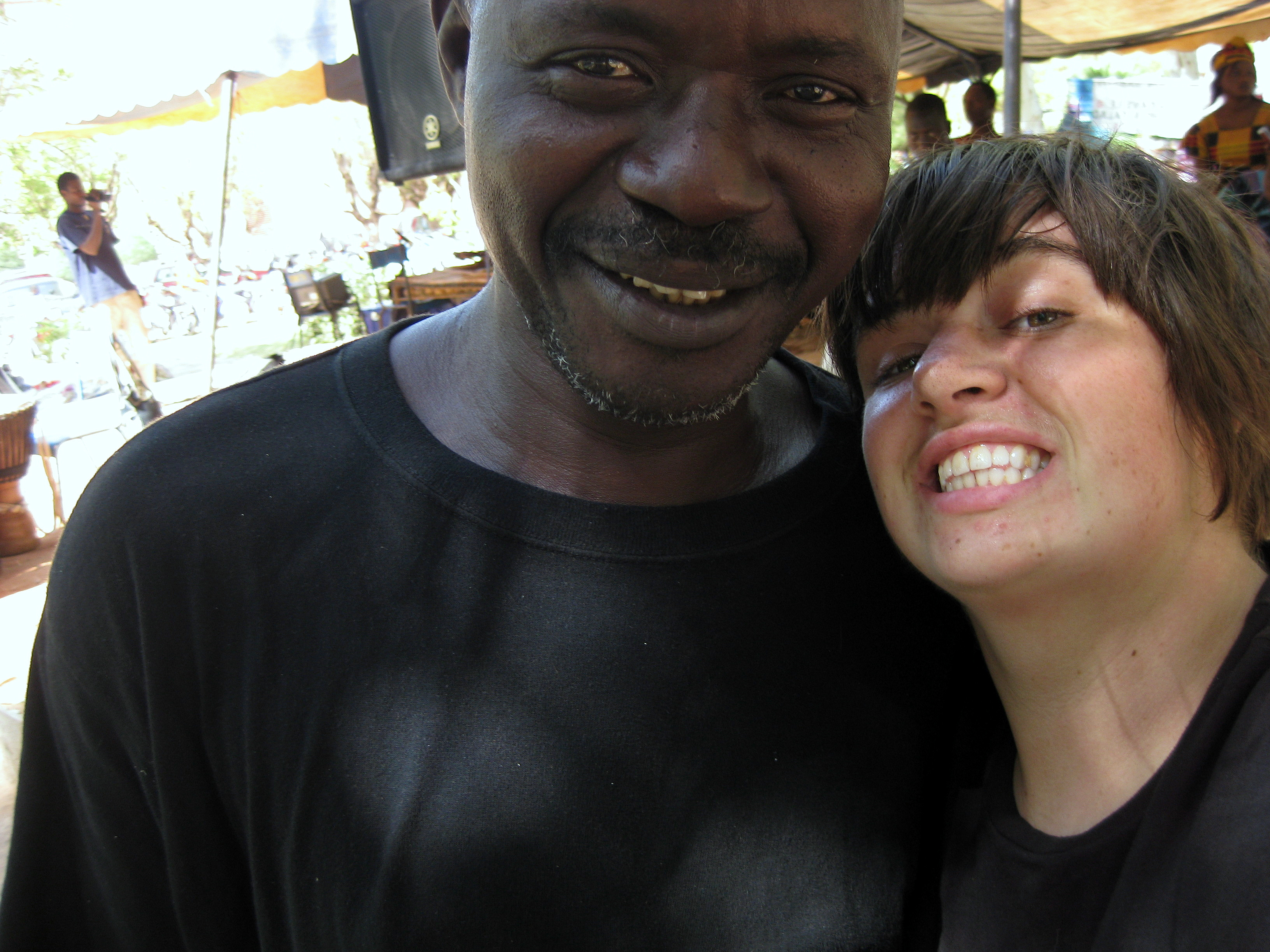
Shea Witzberger in Mali
Shea Witzberger

Dennie: Can you say where you are from, and a brief summary of your history at Antioch College and Nonstop?

Shea: I am originally from all over. I was born in Arizona, but mostly I am from Iowa City, Iowa. I entered Antioch in 2006 right out of high school, and spent two years there, and this fall, I did the Antioch University program in Mali: Arts and Culture. When I was at Antioch, I determined a focus of political theatre and community building. I originally entered thinking I was going to study Peace Studies and Environmental Studies, which is connected for me to community building. I would like to focus more on the arts, so I am doing theater, and now my specific focus in theater is puppetry, which is what I was studying in Mali.

Why did you chose Mali?

I chose Mali because India Davis, another Antioch student said “you are interested in political theater and puppetry. There is an amazing puppeteer connected to the Art and Culture Program in Mali, named Yaya Coulibaly.” Yaya is one of the foremost puppeteers in the world, definitely in Africa, and is known as the guardian of the oldest African puppetry tradition. He is connected with the program as a teacher, and students can apprentice under him. I have to say that all of the teachers for every discipline were that amazing. There were some talented and renowned people. The program sounded exactly like what I should do in the fall. I sure didn’t want to go to a normal school. That would be so anticlimactic. I called them up to see if that was a possibility, and applied.

Can you describe your day to day life, how the program was structured?

For the first three weeks all of the students were living in the same house together. We studied language, history and culture, and got a base. There were fifteen of us, and a teaching assistant. Nick Hockin, the program director, had his own place. We studied all day and did outings, activities, and got a base knowledge. And then we all went into home stays, usually with our teachers. I lived in the same house as my teacher and his family, and many of the dancers and puppeteers in his troupe. This was the apprenticeship, which didn’t feel like a class. It felt like intensive learning with a mentor. Most people (in the program) remember the apprenticeship, because that was the most fun part. It made the experience really round.

Two weeks in the middle, we traveled around the whole country of Mali in a bus, and did more touristy things. We saw the Grand Mosque, different cities, and went to cultural events in those places. Then there were four more weeks in our home stays. In the last week, we were all scrambling to prepare for a final showing of what ever we had produced. The performers got together and collaborated on creating a big show, a spectac. It was hard, because it was the same time that our academic papers were due, so we were writing twenty page papers, and rehearsing all day. But it was glorious.

Did you mostly study puppetry?

I would say all art in Mali is more integrated than in the States. There is less of a fine art division. Puppetry is always performed with dance, with singers. There have to be musicians, and there is storytelling. I learned how to make marionettes and rod puppets. I made, carved, and sanded a marionette and a rod puppet in the first weeks, working with Yaya Coulibaly . Then I studied with the troupe in performance, and I was performing giant cow puppets with cages made out of sticks and covered with raffia. I learned how to perform small puppets, how to stilt, and how to dance on stilts. I learned some song, and playing some instruments, playing basic jenbe and kora. It was lot of things wrapped into one. It was a really whole experience, because I was living with people I was working with, and learning spiritually from them.

Would you be willing to perform for us?

I need to build some stilts. I am going to build stilts with Katie Connolly, (another Nonstop student) who is also a puppeteer. A lot of the things I performed in Mali were giant and I wasn’t able to bring them back. I have my marionette. I would like to do a small informal performance for everyone. That is on the record.

What was the hardest thing for you?

At first I was scared of everything. When traveling, I didn’t speak the language. The colonial language is French, though most people speak Bamanankan. I didn’t have any French background. I excelled in Bamanankan, because I couldn’t rely on French as a crutch. The hardest thing was the unknowing. I was really comfortable at the end. I didn’t want to come home. Something that was unexpectedly hard is that I have really weak lungs, and the pollution in the city was hard to deal with physically. I didn’t have any health problems adjusting to eating and I was drinking tap water. I couldn’t breathe sometimes. That was hard, enduring the workouts every day. Eventually I got a deep cough from the pollution and had to be medicated. The country is beautiful, and the city is huge – over a million people – one of the fastest growing cities in the world. It was gorgeous.

What was the easiest thing for you? What did you have skills in? What did you bring?

I got along very easily, because I am so damn talkative, and outgoing. When I moved in to my home stay, I quickly made friends with the troupe, and the people who would hang outside my house and drink tea. That helped my language, and helped me communicate a lot. After not that long, I could go out by myself on a bus, and be more independent, because I could communicate pretty easily. That and the comic part of performance came easy to me. The dance part did not come so easy at first thought it was fine in the end. But the visual comedy, and being outlandish was a common theme between myself and the other troupe members. The experience was like being at home. I was totally comfortable. I made such good friends.

Talk about your final performance.

We had to do a performance, or an exhibition of visual art. We had to be able to talk about what we were doing. It had to be substantive. Many of the performance students decided to work together. A drummer can’t really play by himself. The two dancers needed music. Me out by myself with a marionette would not be that interesting, but a galloping giant cow puppet, to the roar of multiple drums, backed up and overcome by these dancers leaping and then stilts – now that is BIG.

How was it being a young white American?

It was really hard to process after being at Antioch. There is a very specific focused lens at Antioch, in which we look at identify, race, all these issues, that is radical and contextual, and it is in the context of the States, normally. I had been looking at these issues in a very America-centric way. That makes sense, because that is where I am from. I had been focused on all the ways to behave and to think and to talk in a very specific, focused way. I thought more about these things than some of the other students, because that is what you do at Antioch. It was very hard to process things that happened through a new lens.

I felt like I stuck out a lot, something that is a traveling experience, generally. Something that happened for me is that culturally, fat is beautiful in Mali. I am a fat person in America. I learned a lot about the ways I thought about myself, by being in a place that was so different. I got a lot of attention, because I was outlandish and crazy. I was by myself alot, and white and young. People thought I was from the Peace Corps. Not a lot of white people speak Bamanankan. Most white people are French, doing humanitarian work, or hanging out, or are American military people. Our program was one of two student programs there. [The other] is focused on health and women’s issues. You could feel the rarity [about being a white person]. It changed the dynamic. When people realized I spoke Bamanakan, they wanted to talk to me about so many things.

How did you learn Bamanankan so quickly?

We had good language teachers. Everyone spoke Bamanankan. My home stay family is large, and houses the troupe. Everyone is there all of the time. There would be 40-100 people when there was drumming. I had a heavy exposure to people. We first learned greetings and casual talk. I was the MC at the final show, and I was speaking Bamanankan, which I felt was a feat. I was surprised with myself. I read it off a card. We had to learn fast.

What do you take away?

The first thing is connections with people, learning how to connect more easily, and becoming more comfortable with how to do that. I still talk to people from Mali, at least once a week (in Bamanankan) on the phone. I would love to get back soon. That is a serious goal. With all travel, it broadens a person’s world perspective in a way that I could not have imagined before. I am on a ladder, and Iowa is in one place, and it is wonderful, but my exposure was limited to people of similar background to me. Coming to Antioch, it was a big leap, and things were different. A lot of people (at Antioch) had similar backgrounds, but a lot of people had really different ideas than I did. Mali was another giant leap-in learning how to talk to people about things that I disagreed with them about, trying to recognize I would never understand other people’s experience, and trying to understand people’s experience. I feel more open as a human. It opened a door for me. I need to travel more. I need to go back to Mali, to work with these people I made connections with, to further my friendship. I am more open now.
Dennie Eagleson
By Dennie Eagleson

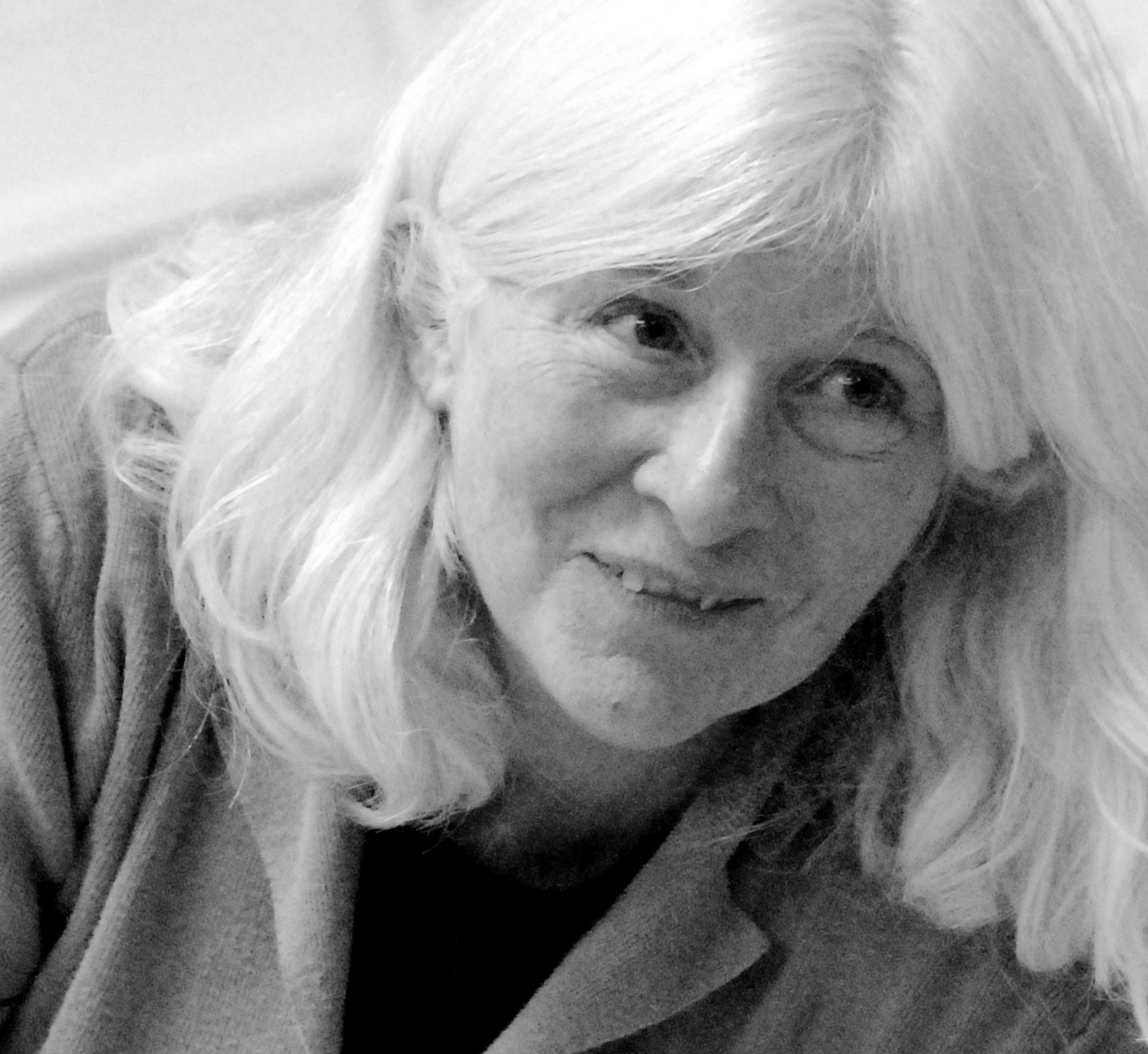
Dennie Eagleson teaches photography and Convergent Journalism at Nonstop and is also involved in organizing workshops in Local and Sustainable Agriculture.
Newsbriefs from Yellow Springs

Newsbriefs from Yellow Springs

By Jeanne Kay

Pro Tem Board delegation to visit Nonstop

On Friday February 13th, a delegation of Board Pro Tempore trustees will be in Yellow Springs to meet the Nonstop Community. The team will consist of: Frances Horowitz, chair, Zelda Gamson, Ev Mendelson, Steve Schwerner, Prexy Nesbitt, Matthew Derr and a GLCA representative. The contingency will report on their visit to the whole board.

Risa Grimes on Fundraising

The fundraising target for the 90-day period between the Letter of Intent and the Definitive agreement is $15 million, of which the University will get $5 million. “The 5 million is predicated on the 10-we won’t get the five unless we get the ten;” CRF Executive Director Risa Grimes explained, “This donor [has made] a challenge grant.” CRF fundraisers are asking donors to pledge over a 5 year period; “It’s pretty normal that you ask for 5-year;” Grimes said, “It’s not unusual to give people that much time to pay that much money. The economy’s pretty bad so we want to give people the opportunity to participate-not make it so hard on them. ”

Grimes said that no fundraising numbers were available yet but that the CRF would provide public updates in the near future.

As to fundraising strategies, Grimes said that they were consistent with past processes: “We’re sharing the future-what it could be. We’re talking about getting their college back… we’ve been building a strategy for a couple years now-as we’ve gone through all of this, it’s just good memories… share stories, hope that it touches them somewhere where they want to help support… you do that over and over again.”

The Future of the CRF

The College Revival Fund “is still administering the funds that have been raised so far,” according to Acting President Ellen Borgersen. The Alumni Association, however, has turned responsibility for the college to the Board Pro Tempore-which has taken over the Antioch College Continuation Corporation. “The ACCC does not yet have its 501C3;” Borgersen explained, “The money that the ProTem Board is raising will be housed in the CRF until they get their 501C3 but they will be donor directed funds which the ProTem Board will control.”

After these funds are transferred to the ACCC, the CRF will continue to administer donations for the Nonstop Liberal Arts Institute and the legal fund.  “At some point the CRF will go out of business,” said Borgersen, “We’ll go out of business when our work is done… When we have finished the fundraising for Nonstop and when we determine that it’s no longer necessary to maintain the legal fund.”

Alum Lichtig Wins Goshen Peace Play Contest 2008

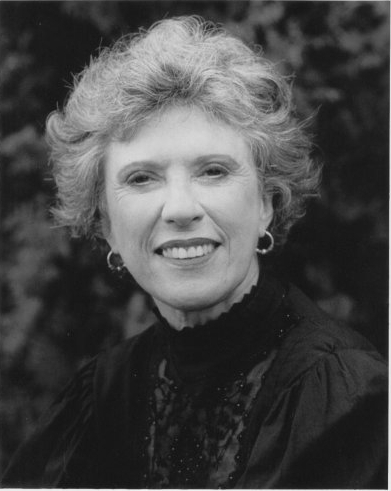
Robin Rice Lichtig, Antioch Alum and accomplished play wrightRobin Rice Lichtig, Antioch College alum (59-63) placed in the top three in the Goshen Peace Play Contest 2008 this summer for her one act play, “Blood Sisters.” This prestigious award is hardly the first Lichtig has received in her play writing career.

According to Lichtig, the world of play writing is a tough one. “Any where I send a script for a competition, they get any where from 500 to 1000 scripts.” However, for Lichtig and other playwrights, contests are only the beginning. “I remember you asked me ‘what does this [award] do for you’ – and I said ‘nothing’ and it really does do nothing at all, except that when you send the play out you can mention that it was a winner,” she said. “All it ever gets you: Sometimes you get a production. Sometimes you get $300 if you’re lucky, but really that’s about it.”

Lichtig specifically spoke about the difficulty of landing a major production. “There are almost no agents for playwrights; they’re getting out of the business. It’s financial.” she said. Lichtig went on to describe a conundrum she says she and others are experiencing. Landing a major production is very difficult, especially without an agent, but the agents still in the business only work for those who have had major productions.

Lichtig also spoke of another difficulty she’s faced, one that she “didn’t want to recognize for years.” “It’s something like 12% of all the plays that are done are by women, which is a worse percentage than it was 30 years ago.” she said. “It’s a very complex situation” she said, before going on to say that “part of the reason is that the artistic directors and the boards of directors of theaters are almost all men.” Only one or two women have plays in New York this season.

However, while unhappy with the current state of the theater industry, Lichtig continues her work play writing. For Lichtig, “to be a practical playwright, you should write a play that can be done on a bare stage.” However, she doesn’t see that as a limitation. One of her plays, for example, is set in “a very elaborate tree house” she said, and “this can all be done on a bare stage and very few props.” Louise Smith, theater professor at Nonstop Institute was drawn to “Blood Sisters” not only because of the writing, but also because it could be performed with few people in a small space, allowing for maximum flexibility; she hopes to do a reading of the play in Yellow Springs this winter.

While Lichtig’s repertoire includes imaginative and magical elements, her work also finds solid ground in social, political, cultural and environmental issues. Lichtig’s winning Goshen Peace Play “Blood Sisters” is based on real events from 2003, when three nuns were convicted in Denver for defacing a nuclear weapons site. “Robin clearly takes affective poetic liberties with the story and creates characters that are charming and unexpected.” Smith said, when asked about the play.

Lichtig’s work can be found outside of theaters, too. Her publishers include Bakers Plays, Dramatic Publishing, Smith & Kraus, Brooklyn Publishers, JAC Publishing and Promotions, ArtAge, Mae West Fest, and ManhattanTheatreSource.

In 1959, Lichtig entered Antioch College in the visual arts program. Within the year, she switched to political science; in 1963 she “ended up joining the PeaceCorp and dropping out of Antioch, which was a huge mistake.” For the next twenty years she remained politically and socially active and continued her education, including a masters degree in play writing at the age of 50 from Antioch McGregor. Since then, she’s authored over 40 plays and won numerous contests.

Crossroads

Louise SmithThis is a time of major decisions with major consequences. On the global level, we have choices about how we live on the planet and with each other. On the national level, we are faced with with either choosing to make history or suck up more of the same. Locally, our village is facing changes and choices on major issues such as energy, a new village manager, how we grow and thrive economically and what happens to the historic college that was a cornerstone of our identity as a town. In the next weeks and months, I will talk with faculty, students, staff, alumni and villagers on a weekly basis about where we are and where we are going globally, nationally, locally and even personally.

It is mid September. A year ago in June, we got the word that the college would be closing in a year. For many this was a shock. For some it was a gut feeling that came to fruition. For a few it was an inevitability in a long decline. Whatever your analysis, the event had unforeseen responses and repercussions. We all know the litany of endeavors to save Antioch College: the Alumni Association, the AC3, the efforts within the Village of Yellow Springs to bring pressure on the University and show support on the local level, National academic entities such as the GLCA and the AAUP have gotten involved in a variety of ways that are ongoing. The Antioch College faculty brought a lawsuit, set it aside and revived it. They also worked to gather roughly a thousand signatures from academic luminaries and fellow professors in favor of their cause and most potent of all, created the Nonstop Institute for Liberal Arts. The Alumni mobilized in unprecedented ways, building over 40 chapters around the country and funding the Institutional Advancement office for the campus as well as the Nonstop Institute. Current, past and future students engaged with the effort on every level, from collaborating to launch Non-stop to enrolling and pledging to return after a term on Antioch Education Abroad or co-op. The list goes on. It is not for lack of trying that the college is still in limbo.

So where exactly are we? There is now a new round of discussions about separation of the college from Antioch University underway. The existence of Nonstop gives us an orientation towards getting on with the journey of revitalizing the college for real, a kind of action research that will yield valuable insights and information about how and who we can be in the future. In the coming month, a meeting will be convened at Earlham College, sponsored by the GLCA that is called “Invent a College”. It would be a crying shame if the organizers of this event do not pay very close attention to what is already being invented every day here in our village. Nonstop has great potential and its leaders and participants are already developing the understanding that will move this effort forward.

Going forward means working with Nonstop and the other efforts that we can impact on a daily basis within our scope of power and influence. The October 1st Committee is working with the village leadership, villagers, faculty and alumni to preserve the campus. This committee has recognized, as many of us have, that the University has done a shoddy job at best and an intentionally negligent job at worst, of putting the buildings to sleep until we figure all of this out. Whatever the intention, the result is the same: a major compromising of the physical and historical assets of the college. We need to look behind us, where we have come from to the historical aspects of the college that we are stewards of. Without that we will fly headlong into creating an entity that bears absolutely no resemblance to what was. And while this may be desirable to a small portion Antiochians, for many of us, our passion for the place is grounded in shared values, understandings and memories that cannot be separated from our roots on the campus. In the coming weeks and months, it will also become apparent how our village has built its identity around the college. The health of the village financially and socially is in great jeopardy.

All of us have had our own personal response to the major upheaval that we have collectively experienced. I took a bit of a left turn. Several years ago, when our numbers had fallen and grandiose plans were put in place to revive us, I realized that my personal journey was taking me elsewhere. I spent four years at University of Dayton earning a Masters of Science in Education in Community Counseling. Ironically, while being a student at another institution, I came to value Antioch all the more. I also found that I liked how therapy and teaching theater talked to each other in my brain. I worked for a year as an intern at Wilmington College counseling students there. (I hope to do this again with Nonstop.) However, I knew I needed to challenge myself and move forward on this new road. This summer I took a position as therapist on an ACT team at South Community Behavioral Health in Dayton.

ACT stands for Assertive Community Treatment and my job entails home visits to clients who have persistent and serious mental illness. The people I talk to are mostly diagnosed with schizophrenia and schizoaffective disorder and the challenges they face are numerous : managing finances, medication compliance, skills of daily living and the acute isolation that comes with a lifetime of living with a severe mental disorder. I commute every day to Moraine where the agency is located and then spend a good portion of my nine hour day driving around parts of Dayton I have never seen before. I am challenged in complex and unexpected ways to respond to people who have great need. I work with a team of people in a “transdisciplinary” way. While I am a therapist, I am also doing case management and assessing med compliance. The nurse clearly does counseling and the case manager is surprisingly knowledgeable about medication side effects. There are more acronyms in mental health than Antioch ever had (ACT, IDDT, ODADAS, ODMH, CCOE, DID, PTSD, OCD, ODD etc.) and the politics involved in the health care system are far more screwed up than academia. So I feel right at home—wait—Why in heaven’s name did I do this anyway?

Sometimes I think that despite myself I am living out some kind of Antiochian ideal. For fifteen years I was a professional actor. The next fifteen I was a teacher and for the next fifteen years I plan on developing into a therapist and reinventing my art practices to reflect all of the learning I have been doing. Nonstop is part of this next phase of my life, one in which the walls of the hospital and the college fall away, where definitions of who I am become more expansive and fluid, and where I are humbled and inspired by situations that make me muster more than I knew I had to give.

Are you at the crossroads? Write me at lou422ns@woh.rr.com. I want to hear your story.