By Dennie Eagleson
I spent some time last week talking to Shea Witzberger, current Nonstop student, about her experience in Mali this past fall. Shea is currently co-oping with Anne Bohlen, working on Anne’s documentary film project, Toxic Tours, and taking classes in painting and theatre.
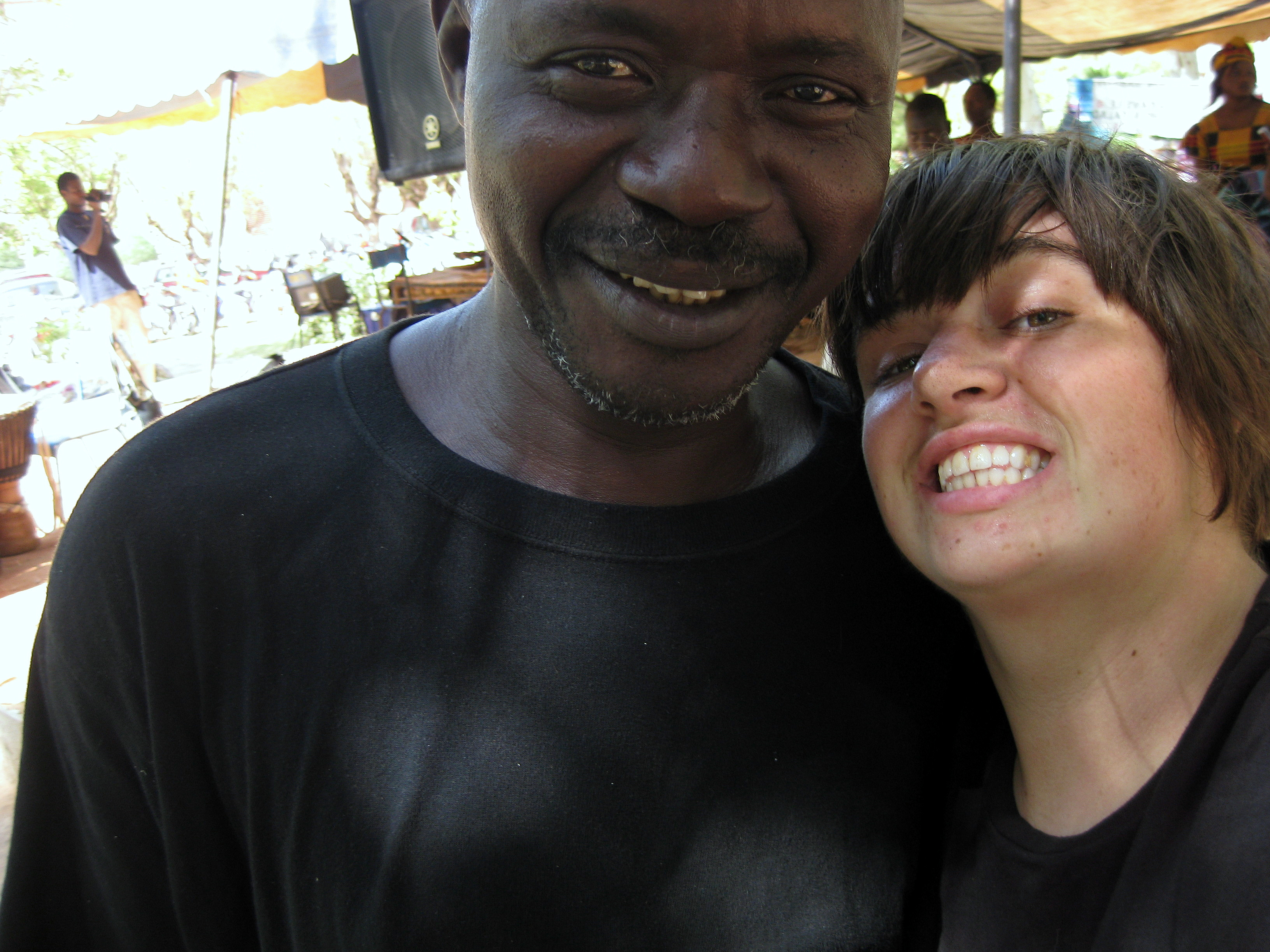
- Shea Witzberger
Dennie: Can you say where you are from, and a brief summary of your history at Antioch College and Nonstop?
Shea: I am originally from all over. I was born in Arizona, but mostly I am from Iowa City, Iowa. I entered Antioch in 2006 right out of high school, and spent two years there, and this fall, I did the Antioch University program in Mali: Arts and Culture. When I was at Antioch, I determined a focus of political theatre and community building. I originally entered thinking I was going to study Peace Studies and Environmental Studies, which is connected for me to community building. I would like to focus more on the arts, so I am doing theater, and now my specific focus in theater is puppetry, which is what I was studying in Mali.
Why did you chose Mali?
I chose Mali because India Davis, another Antioch student said “you are interested in political theater and puppetry. There is an amazing puppeteer connected to the Art and Culture Program in Mali, named Yaya Coulibaly.†Yaya is one of the foremost puppeteers in the world, definitely in Africa, and is known as the guardian of the oldest African puppetry tradition. He is connected with the program as a teacher, and students can apprentice under him. I have to say that all of the teachers for every discipline were that amazing. There were some talented and renowned people. The program sounded exactly like what I should do in the fall. I sure didn’t want to go to a normal school. That would be so anticlimactic. I called them up to see if that was a possibility, and applied.
Can you describe your day to day life, how the program was structured?
For the first three weeks all of the students were living in the same house together. We studied language, history and culture, and got a base. There were fifteen of us, and a teaching assistant. Nick Hockin, the program director, had his own place. We studied all day and did outings, activities, and got a base knowledge. And then we all went into home stays, usually with our teachers. I lived in the same house as my teacher and his family, and many of the dancers and puppeteers in his troupe. This was the apprenticeship, which didn’t feel like a class. It felt like intensive learning with a mentor. Most people (in the program) remember the apprenticeship, because that was the most fun part. It made the experience really round.
Two weeks in the middle, we traveled around the whole country of Mali in a bus, and did more touristy things. We saw the Grand Mosque, different cities, and went to cultural events in those places. Then there were four more weeks in our home stays. In the last week, we were all scrambling to prepare for a final showing of what ever we had produced. The performers got together and collaborated on creating a big show, a spectac. It was hard, because it was the same time that our academic papers were due, so we were writing twenty page papers, and rehearsing all day. But it was glorious.
Did you mostly study puppetry?
I would say all art in Mali is more integrated than in the States. There is less of a fine art division. Puppetry is always performed with dance, with singers. There have to be musicians, and there is storytelling. I learned how to make marionettes and rod puppets. I made, carved, and sanded a marionette and a rod puppet in the first weeks, working with Yaya Coulibaly . Then I studied with the troupe in performance, and I was performing giant cow puppets with cages made out of sticks and covered with raffia. I learned how to perform small puppets, how to stilt, and how to dance on stilts. I learned some song, and playing some instruments, playing basic jenbe and kora. It was lot of things wrapped into one. It was a really whole experience, because I was living with people I was working with, and learning spiritually from them.
Would you be willing to perform for us?
I need to build some stilts. I am going to build stilts with Katie Connolly, (another Nonstop student) who is also a puppeteer. A lot of the things I performed in Mali were giant and I wasn’t able to bring them back. I have my marionette. I would like to do a small informal performance for everyone. That is on the record.
What was the hardest thing for you?
At first I was scared of everything. When traveling, I didn’t speak the language. The colonial language is French, though most people speak Bamanankan. I didn’t have any French background. I excelled in Bamanankan, because I couldn’t rely on French as a crutch. The hardest thing was the unknowing. I was really comfortable at the end. I didn’t want to come home. Something that was unexpectedly hard is that I have really weak lungs, and the pollution in the city was hard to deal with physically. I didn’t have any health problems adjusting to eating and I was drinking tap water. I couldn’t breathe sometimes. That was hard, enduring the workouts every day. Eventually I got a deep cough from the pollution and had to be medicated. The country is beautiful, and the city is huge – over a million people – one of the fastest growing cities in the world. It was gorgeous.
What was the easiest thing for you? What did you have skills in? What did you bring?
I got along very easily, because I am so damn talkative, and outgoing. When I moved in to my home stay, I quickly made friends with the troupe, and the people who would hang outside my house and drink tea. That helped my language, and helped me communicate a lot. After not that long, I could go out by myself on a bus, and be more independent, because I could communicate pretty easily. That and the comic part of performance came easy to me. The dance part did not come so easy at first thought it was fine in the end. But the visual comedy, and being outlandish was a common theme between myself and the other troupe members. The experience was like being at home. I was totally comfortable. I made such good friends.
Talk about your final performance.
We had to do a performance, or an exhibition of visual art. We had to be able to talk about what we were doing. It had to be substantive. Many of the performance students decided to work together. A drummer can’t really play by himself. The two dancers needed music. Me out by myself with a marionette would not be that interesting, but a galloping giant cow puppet, to the roar of multiple drums, backed up and overcome by these dancers leaping and then stilts – now that is BIG.
How was it being a young white American?
It was really hard to process after being at Antioch. There is a very specific focused lens at Antioch, in which we look at identify, race, all these issues, that is radical and contextual, and it is in the context of the States, normally. I had been looking at these issues in a very America-centric way. That makes sense, because that is where I am from. I had been focused on all the ways to behave and to think and to talk in a very specific, focused way. I thought more about these things than some of the other students, because that is what you do at Antioch. It was very hard to process things that happened through a new lens.
I felt like I stuck out a lot, something that is a traveling experience, generally. Something that happened for me is that culturally, fat is beautiful in Mali. I am a fat person in America. I learned a lot about the ways I thought about myself, by being in a place that was so different. I got a lot of attention, because I was outlandish and crazy. I was by myself alot, and white and young. People thought I was from the Peace Corps. Not a lot of white people speak Bamanankan. Most white people are French, doing humanitarian work, or hanging out, or are American military people. Our program was one of two student programs there. [The other] is focused on health and women’s issues. You could feel the rarity [about being a white person]. It changed the dynamic. When people realized I spoke Bamanakan, they wanted to talk to me about so many things.
How did you learn Bamanankan so quickly?
We had good language teachers. Everyone spoke Bamanankan. My home stay family is large, and houses the troupe. Everyone is there all of the time. There would be 40-100 people when there was drumming. I had a heavy exposure to people. We first learned greetings and casual talk. I was the MC at the final show, and I was speaking Bamanankan, which I felt was a feat. I was surprised with myself. I read it off a card. We had to learn fast.
What do you take away?
The first thing is connections with people, learning how to connect more easily, and becoming more comfortable with how to do that. I still talk to people from Mali, at least once a week (in Bamanankan) on the phone. I would love to get back soon. That is a serious goal. With all travel, it broadens a person’s world perspective in a way that I could not have imagined before. I am on a ladder, and Iowa is in one place, and it is wonderful, but my exposure was limited to people of similar background to me. Coming to Antioch, it was a big leap, and things were different. A lot of people (at Antioch) had similar backgrounds, but a lot of people had really different ideas than I did. Mali was another giant leap-in learning how to talk to people about things that I disagreed with them about, trying to recognize I would never understand other people’s experience, and trying to understand people’s experience. I feel more open as a human. It opened a door for me. I need to travel more. I need to go back to Mali, to work with these people I made connections with, to further my friendship. I am more open now.
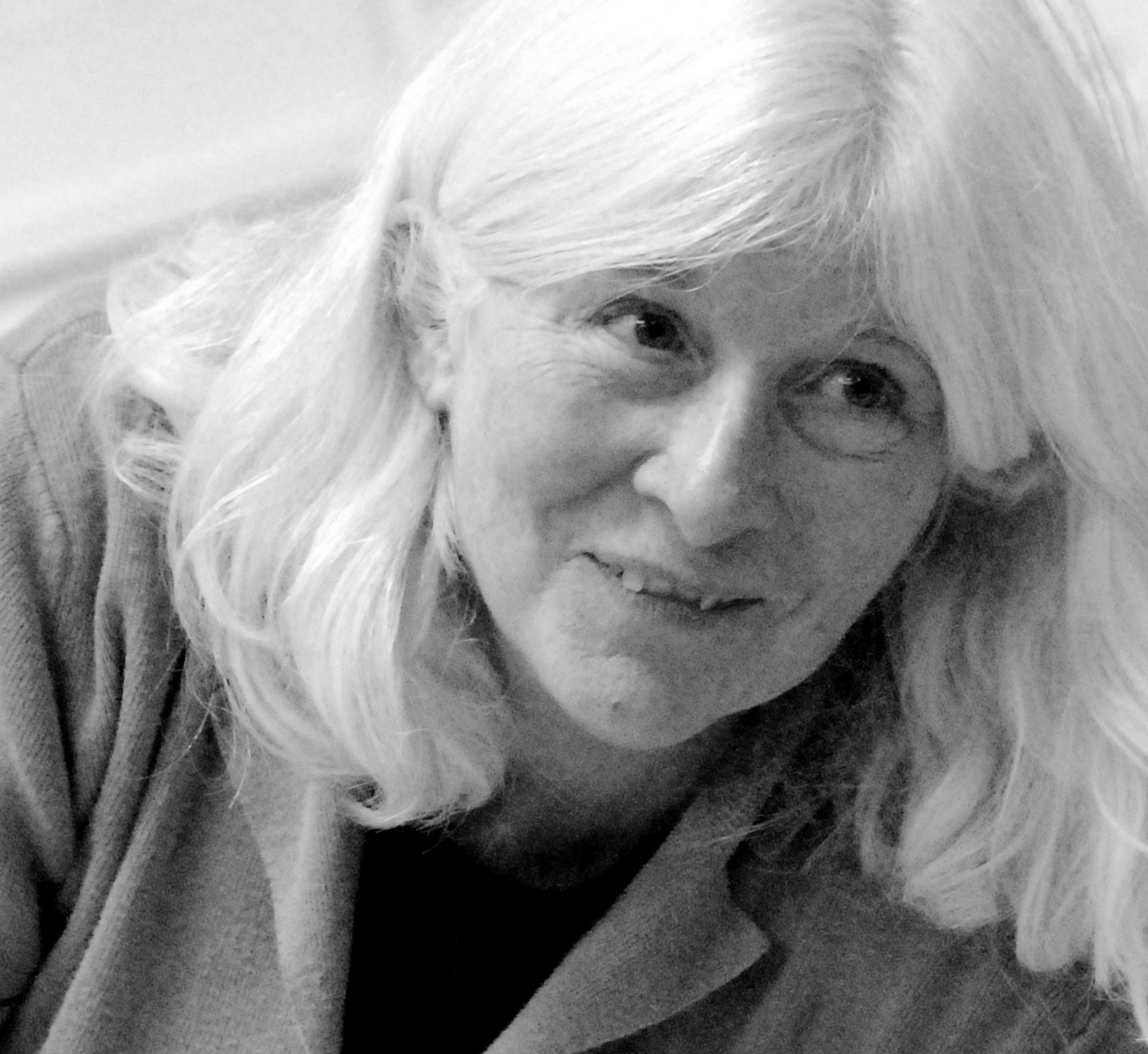
- By Dennie Eagleson
Dennie Eagleson teaches photography and Convergent Journalism at Nonstop and is also involved in organizing workshops in Local and Sustainable Agriculture.